Disclosure: Joyfully Domestic may earn a commission for purchases made after clicking links on this page. View our disclosure policy for details.
I recently shared a few posts about my homeschool planning process…and many of you had questions. I received comments and emails asking about how we create a timetable, how I plan out lessons, my weekly planning process, and more.
I decided to write up brief posts (I’ll try to keep them short!) in hopes of answering these questions as we kick off a new school year!
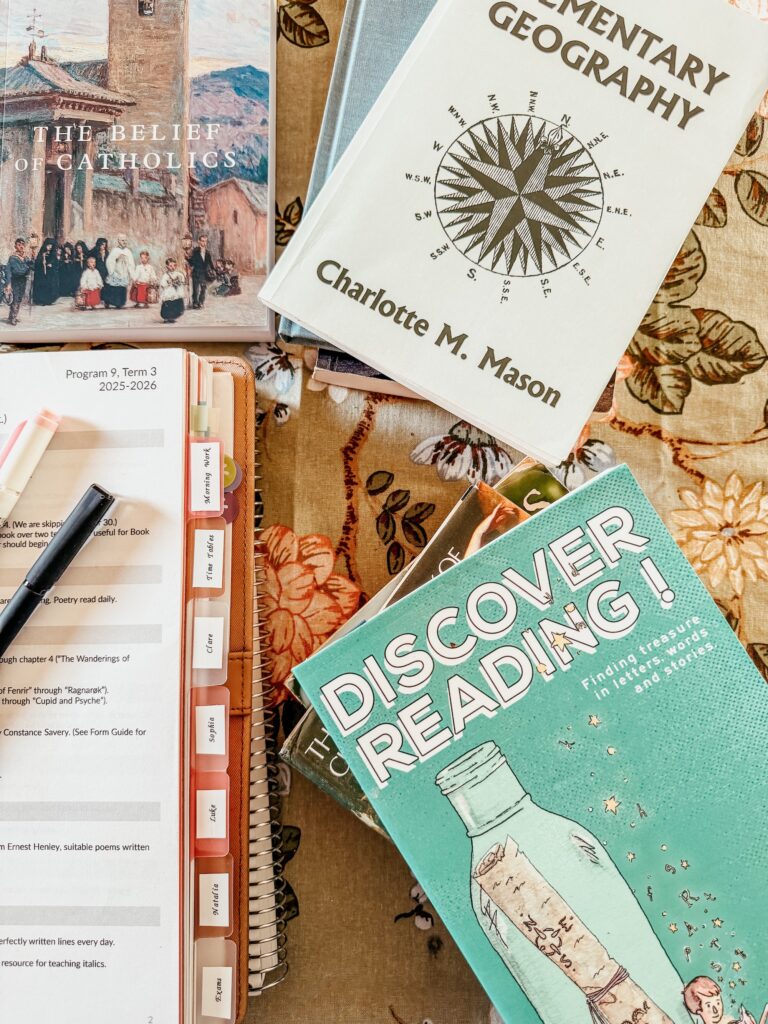
In this post, I am sharing a brief overview of how I plan out our term’s readings. This year I have students in Forms 1-3 (years 2, 5, 7, and special needs). And for a bit more context, I loosely follow The CMEC, Ambleside Online, Simply Charlotte Mason, with many other supplements thrown in between.
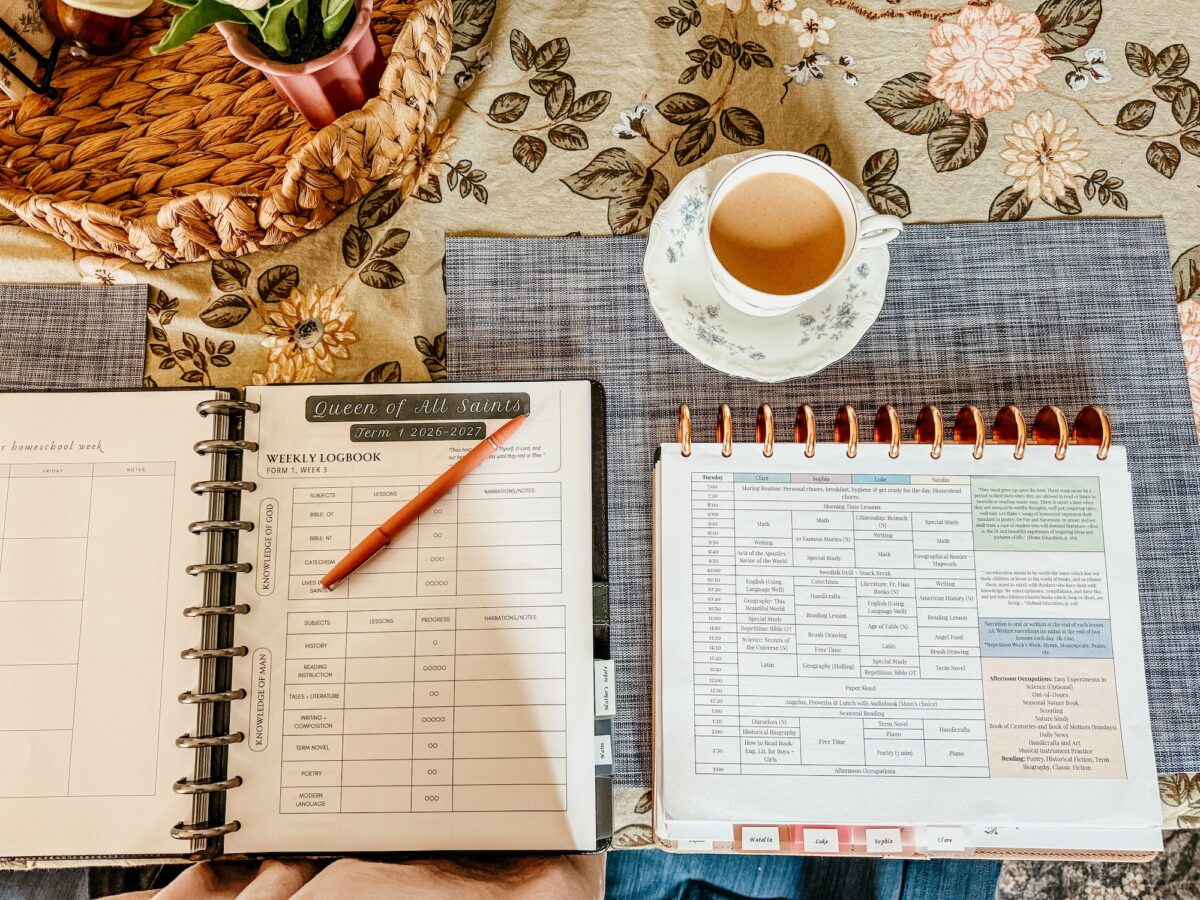
Term Planning
In one of those previous planning posts, I shared How I Plan our Homeschool Year with The CMEC. This post detailed step by step on how I get all of the materials and things organized with using The CMEC. But I also combine other things into the mix along with their curriculum.
Both The CMEC and Ambleside give suggestions of readings for the term. But it really is up to the individual parent to decide how to implement this curriculum for their specific family.
When I begin planning out the school year, I take the books and things and decide what is to be read for the term, spread over the year, or divided over many years.
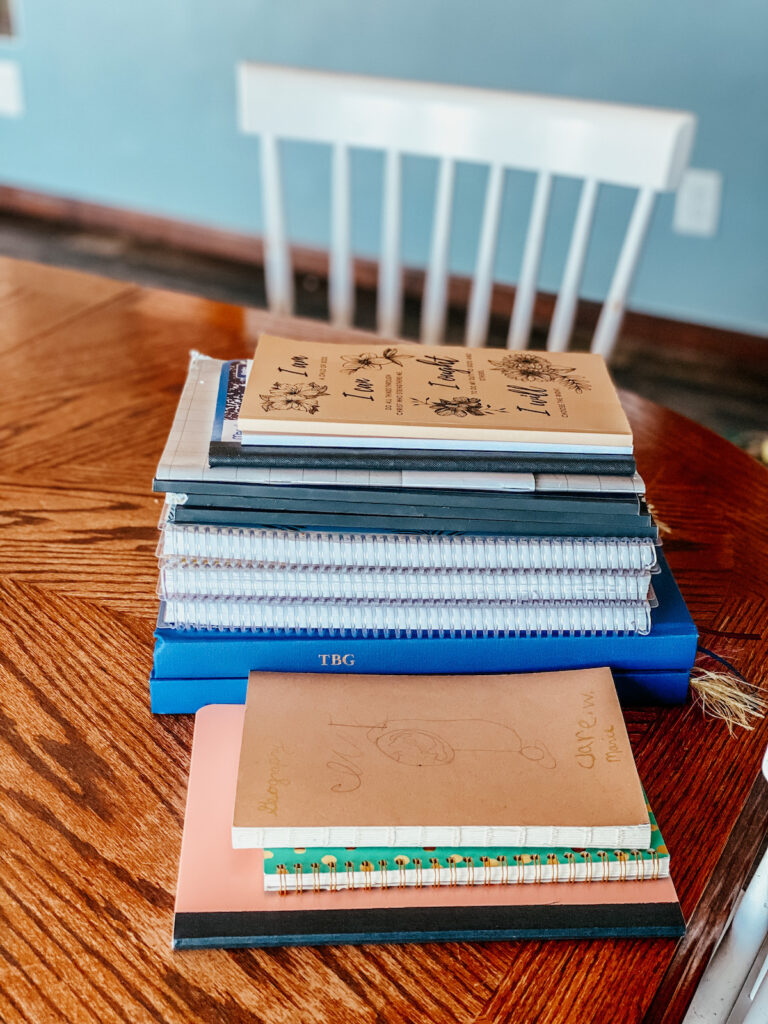
While we “spread the feast”, the lessons are still short. And weekly readings are short to allow for narrations (in some cases, both oral and written), for notebook work, experiments, observations, etc.
Once, I compile the booklists, I make up simple spreadsheets in Google and begin the process of pre-reading. And I do not get to pre-read everything over the summer.
Pre-reading + Scheduled Readings
I pre-read only 1 term ahead. Sometimes, I even pre-read certain selections of the books the week before…or even night before a lesson. This keeps my mind fresh on the ideas to allow for lesson discussion with my children.
Also, I simply do not have the time to pre-read ahead over the summer.
While I pre-read, I keep simple notes on captain ideas or seed thoughts. I will pace out and divide up the readings to what my children can accomplish each term. And then I write out what I want my independent readers to read each week.
This is written on small index cards with boxes for them to check off when done. I put simple reminders that they must read & narrate at the bottom. Sometimes I want them to sketch or do other things like write in their book of centuries and I mark this on the bottom of their bookmarks.
These are just reminders of what they can expect from a certain book, but we still discuss and complete many of these lessons together.
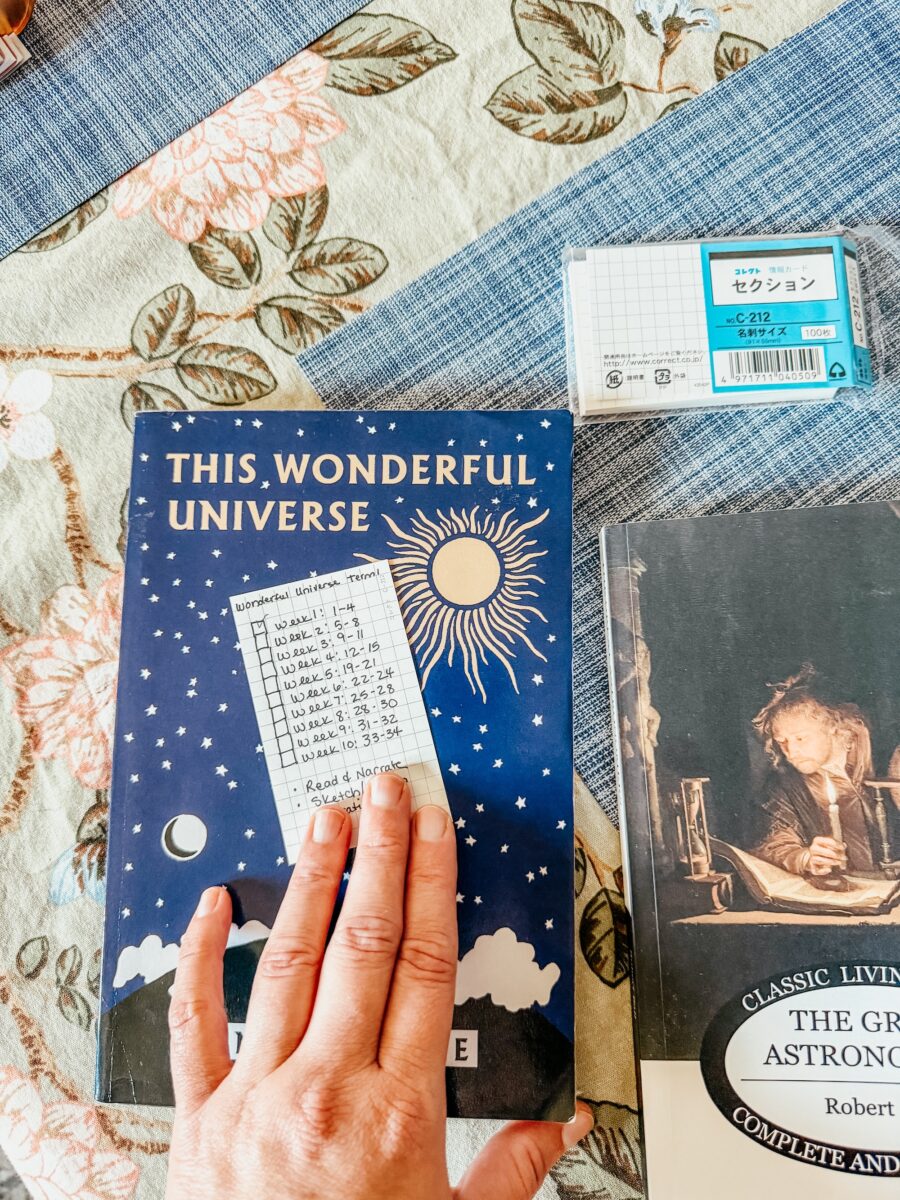
I have used these index cards from Jet Pens to make the book marks for several years. If you prefer to order from Amazon, I’ve found something similar, although slightly different here.
Weekly Planning Process
As I sit down to prep our weekly lessons, I review my teacher planner/logbook and timetable. I will also print out a fresh logbook pages for each Form.
I recently wrote about my mother teacher logbook setup, if you’d like to read it. I did change things a couple of weeks into our term and made my own logbook pages because this just worked better for me.
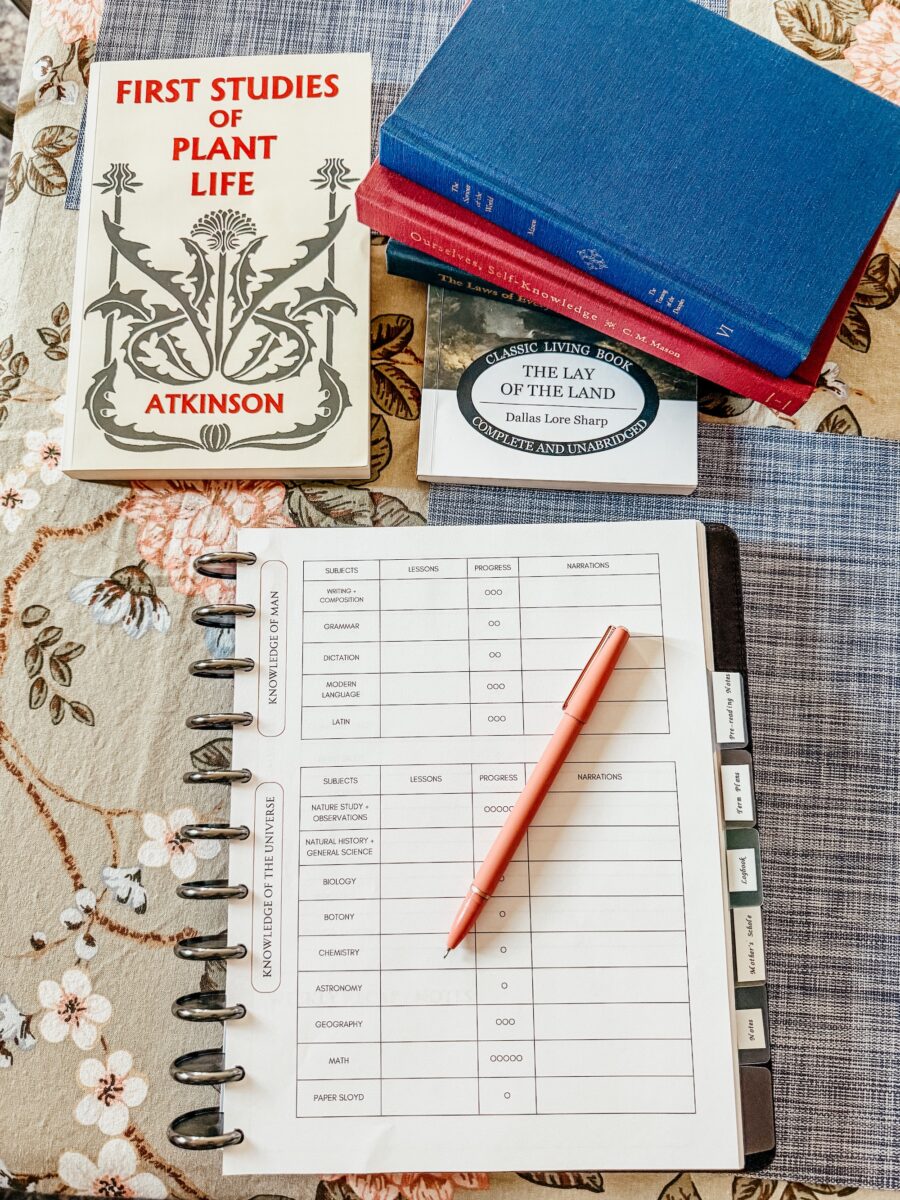
Here are the links to each form specific logbook:
—Form 1 Logbook
— Form 2 Logbook
— Form 3 Logbook
A logbook is a little bit different than a traditional planner. Instead of planning the lessons ahead in the planner, you log what you’ve actually accomplished.
At this point, I have already planned the readings in my spreadsheet, the student’s bookmarks, and in our timetable. So writing it out in my teacher planner again, feels redundant.
Also, one more thing to mention, our terms are 12 weeks long. However, I only plan out for 10 weeks, with the 11th being for makeup work in case of illness or other unforeseen interruptions. Our 12th week is also for extra readings, and exams. This really has worked well for us over the years.
So, now back to my weekly planning process. I check over the timetable and look over our previous week’s work. Do I need to make any adjustments to the timetable? To the readings? How was the pacing? Narrations—were they good? Or do they need work? I make note of these things and adjust as needed.
Generally, I review the notebook work each day, but if anything kept me from getting through each one, I will get caught up on that at this point.
As I am planning for the week ahead, I really like to take this quote from Charlotte Mason to heart…
The teacher’s part is, in the first place, to see what is to be done, to look over the work of the day in advance and see what mental discipline, as well as what vital knowledge, this and that lesson afford; and then to set such questions and such tasks as shall give full scope to his pupils’ mental activity.
CHARLOTTE MASON, VOL 3, SCHOOL EDUCATION
So, that’s all I do each week to plan and prep for the week ahead. Please feel free to reach out with questions and I will do my best to answer them all.
What stands out to you from these ideas?
I hope that you found this post helpful and I’d love to hear what resonates most. And I hope that you will share your planning process with us in the comments section below!