Disclosure: Joyfully Domestic may earn a commission for purchases made after clicking links on this page. View our disclosure policy for details.
In this post, I’m sharing what is meant by living the contemplative life as a Carmelite Tertiary vs the prayer of contemplation.
The spirit of the order of Our Lady of Mount Carmel is contemplation. And the contemplative life should not be confused with the prayer of contemplation. This form of prayer is a gift of God, and as St. Teresa of Jesus says, He gives it “to whom He wills, when He wills, and as He wills.” But this is not the same thing as the contemplative life.
In this post, we are sharing quotes and approved sources regarding these topics. But also, there is so much that can be said about these topics, it cannot possibly be covered in one blog post. So, I will also link to books and resources for additional reading if you desire to read more.
In addition, this is not meant to be a spiritual advice post. I know how hard it is to find good sources and direction on this topic and I’m only sharing quotes and resources that have helped me as a Tertiary. Please seek guidance from your spiritual director/priest.
“A Carmelite’s day is a communing with God, from morning till night, and from night until morning. If He did not fill our cells and our cloisters, how empty they would be! But we see Him through all, for we bear Him within us, and our life on this earth is an anticipated Heaven.”
Sr. elizabeth of the Trinity, OCD
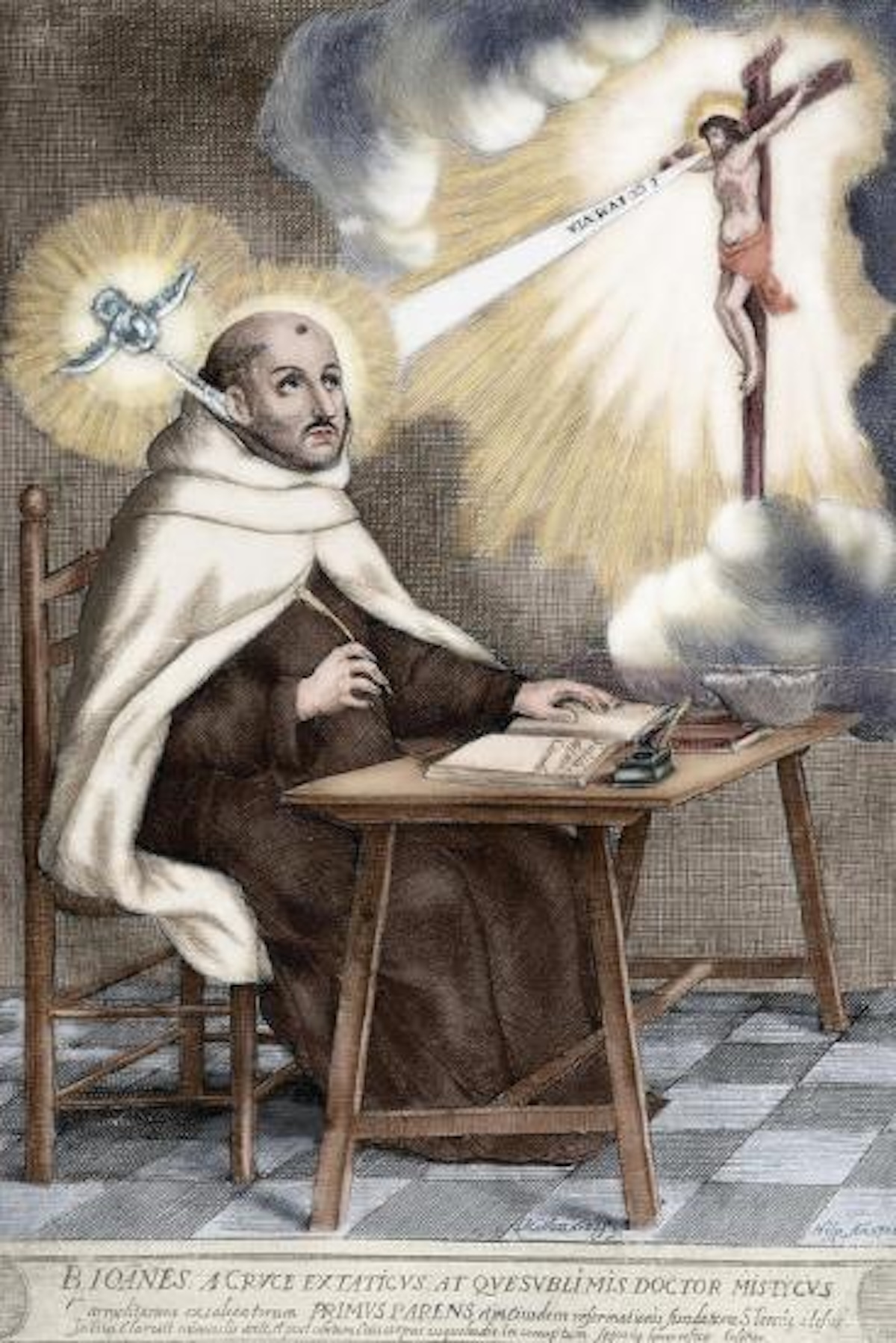
“Ideal: the union of the soul and God, a union more intimate than that of the window and the ray, of the coal and the fire. Wondrous means: surrender of the soul to the action of God by prayer, ‘holy meditations and contemplations,’ in a word, Love and its pursuit, those are the spiritual arms of the Order of Carmel.
“Its motto is that of Saint Paul, ‘Ambulate in dilectione’ (walk in love). The child of Carmel ‘knows only one means to reach perfection…Love’; nothing troubles him, nothing affrights him—nothing is wanting to him. God alone is sufficient for him. Following the beautiful programme of Sister Elizabeth of the Trinity, his life must be a continual communion, ‘he awakes in Love— the whole day is lived in Love in doing the will of the Good God—then, when evening comes after a dialogue of love which has never ceased in his heart, surrendering to the fire of love which consumes all his faults and infidelities, he sleeps again in love’ under the gaze of Our Lady, the sweetness and glory of Carmel.” — Rev. Father Eliseus of the Nativity, OCD
What is the Contemplative Life?
And again before we go further, I want to make a little distinction. In this post, I am sharing about the life of a Carmelite Tertiary and not about the contemplation I often talk about concerning what we do in our homeschool. As Charlotte Mason homeschoolers, we focus on the habit of attention, making connections, forming a “science of relations”. We limit digital distractions and work to cultivate deep thought, quiet reflection, and attentiveness in our days. This is different from living a contemplative life in a religious sense or as a Tertiary.
The contemplative life is a preparation for the prayer of contemplation. But not all who live this contemplative life, may reach contemplation. And again, remember what St. Teresa of Jesus says, God gives it “to whom He wills, when He wills, and as He wills.”
This is not something that we can attain on our own. However, both St. John of the Cross and St. Teresa of Jesus do give instruction on how to prepare ourselves to receive this grace.
The contemplative life directly seeks for union and intimacy with God. It is a life of prayer and mortification.
“The old distinction of the Christian life into active and contemplative is based on the twofold means by which we can cultivate in ourselves the virtue of charity, having these two objects: God and neighbor.
Everyone knows that Christian perfection—that is to say, sanctity—consists essentially in the perfection of the virtue of charity, but precisely, this virtue, having two objects, can be cultivated in us by service of the neighbor for love of God, or by the direct search for the fullness of the love of God.
The effort to serve one’s neighbor constitutes the active life; the direct search for the love of God constitutes the contemplative life.
And just as love tends to stabilize intimate relations with the person loved, this seeking of the fullness of the love of God can very well be characterized as the search for divine intimacy. It is commonly said that he who seeks intimacy with God gives himself to the contemplative life.
For this search to be efficacious, however, the most suitable method should be used to procure it. The means best adapted to deepening this intimacy with God in the soul are principally two; and the whole of tradition indicates them as prayer and mortification.”
— “Union with God” by Fr. Gabriel of St. Mary Magdalen, OCD
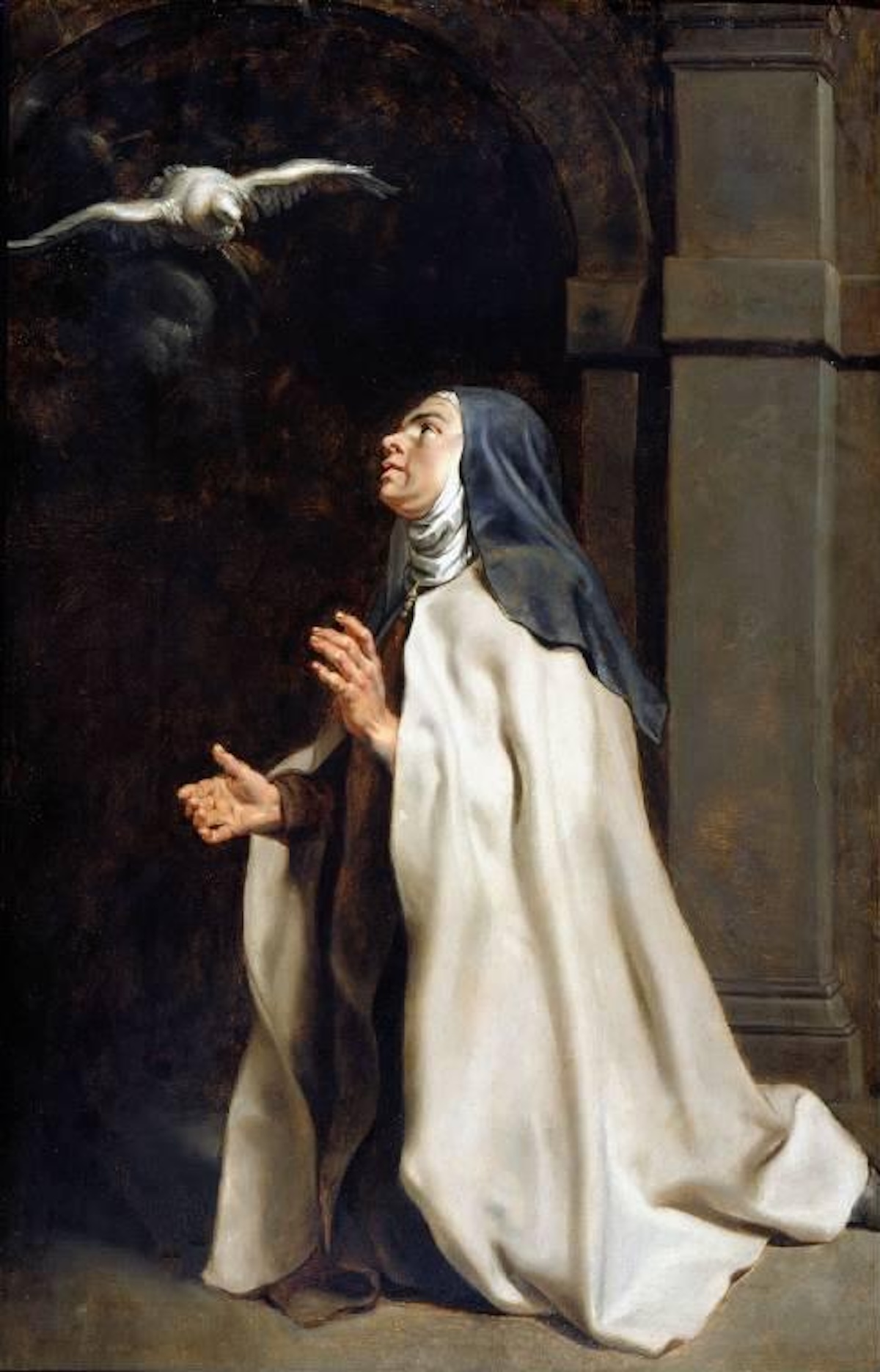
Carmelite Tertiaries and the Contemplative Life
“Carmel’s Call is a call to prayer. For nine centuries before the coming of Christ, holy men lived on Mount Carmel and gave themselves to the work of prayer and contemplation.” — Taken from the Manual (imprimatur 1959)
“What is the spirit of the Order of Our Lady of Mount Carmel? It is contemplation. The Order originated in mountains, in deserts, in solitude. From its earliest traditions it receives the inclination and even the obligation to foster a life wholly interior, retired and hidden.
Since St. Elias, the Patriarch of Carmel, lived always in God’s presence, and had for motto those beautiful words: ‘The Lord liveth, before whose face I stand’ (III Kings); since, according to the opinion of several doctors, he saw the divine essence on earth, as the blessed see it in heaven, he has inspired his religious with the spirit of contemplation, and though, by the authority of the Church, they be occupied in assisting their neighbor, he does not fail to preserve contemplation as the principal and essential aim of their Order. . . . drawing us to God, leading us to God, uniting us to God.”
— Fr. Stephen of St Francis Xavier, OCD
The following is taken from the foreward to the book, Way of Perfection for the Laity:
“Those who argue that a life of Christian perfection is almost impossible when living in the world and who thereby forget Our Lord called all to perfection: ‘Be ye perfect as also your Heavenly Father is perfect’ (Matt. 5:48), will find in a careful perusal of the book the error of their statements.
“But it is chiefly to those who, if circumstances permitted, would seek the solitude of the cloister, that the book will have its irresistible appeal. It will prove to them that it is possible to live a contemplative life, even whilst forced to remain in the world.
“The interior life, the ideal which Carmelite Tertiaries have always before them, is carefully portrayed; the means to attain this ideal are carefully explained. The way is clearly indicated by which Carmelite Tertiaries seek for perfection in whatever position in life they are placed, whether exalted or lowly.
“If we bear in mind the grave warning of Our Lord: ‘How narrow is the gate, and strait is the way that leads to life: and few there are that find it!’ (Matt. 7:14), this book should come as a beacon of light to those in earnest search of a deep interior life, a realization that here at last is what they had always sought but hitherto never found.” —an English Tertiary
Related: Practicing the Presence of God
“The difficulty that so many generally find in the study of mystical theology [is that] they want to discover fixed rules in it, like those of asceticism, which are based on the ordinary conditions of virtue, whereas the one and only rule is to be attentive to the inspiration of the Spirit of sanctification, who is not content merely with the good but ever urges us in each single instance to what is most perfect, best, most in conformity with God’s pleasure.”
J.G Arintero, O.P.
So then, what is contemplation?
In the simplest of terms, it is an experiential loving knowledge of God.
It is a form of mystical prayer or mysticism, but not to be confused with the Eastern form of “mysticism”. Often times in the modern church, you will hear of centering prayer and other forms of false mysticism. These are a not a true form of contemplative prayer.
And again we cannot achieve this prayer on our own or through force. Let’s recall what St. Teresa of Jesus says, God gives it “to whom He wills, when He wills, and as He wills.”
“For contemplation is nothing else than a secret, peaceful and loving inflowing of God.” — St. John of the Cross
“…it is a particular way of knowing God whereby that intimacy with God to which the contemplative life aspires is best achieved.
I am speaking of a ‘particular way of knowing’ God, because God can be known in different ways. There are two rather different ones: the first is the intellectual way, which is verified by means of the operation of our intellect; the second is the experiential way, which is ascertained fundamentally by means of a love that proceeds from our will.” — “Union with God” by Fr. Gabriel of St. Mary Magdalen, OCD
He continues later on…
“Deep and intense love of God does not directly give us new ideas of God, but it communicates to us that which can be called the ‘sense of God.’ With this sense, the soul realizes, not with reasonings or proofs, but in a way, so to speak, experientially, that he is so different from all creatures, so unique, so great as indeed to merit all the affection of our hearts.
This is verified especially when the soul enjoys the love that St. John of the Cross calls passive—that is, the love in which the soul is not only moved toward God of its own initiative but also feels itself drawn by God. As St. Teresa of Jesus explains, describing the prayer of quiet, which is one of the first stages of contemplation, the soul feels that its will becomes a prisoner of God and it would not be possible to love anything else.
It feels so content with its God that a great peace invades it. It feels in its right place, in a contact of love with Him, who has created it for Himself. It could say with St. Augustine: ‘Thou hast made us for Thyself, O Lord, and our hearts are restless until they rest in Thee.’ (Confessions I, 1). Here, indeed, it rests in God and feels that it could be completely satisfied. Thus, by means of love, the soul arrives at a certain experience of God, which is then reflected in the intellect, without, however, taking there the form of concepts.”
— “Union with God” by Fr. Gabriel of St. Mary Magdalen, OCD
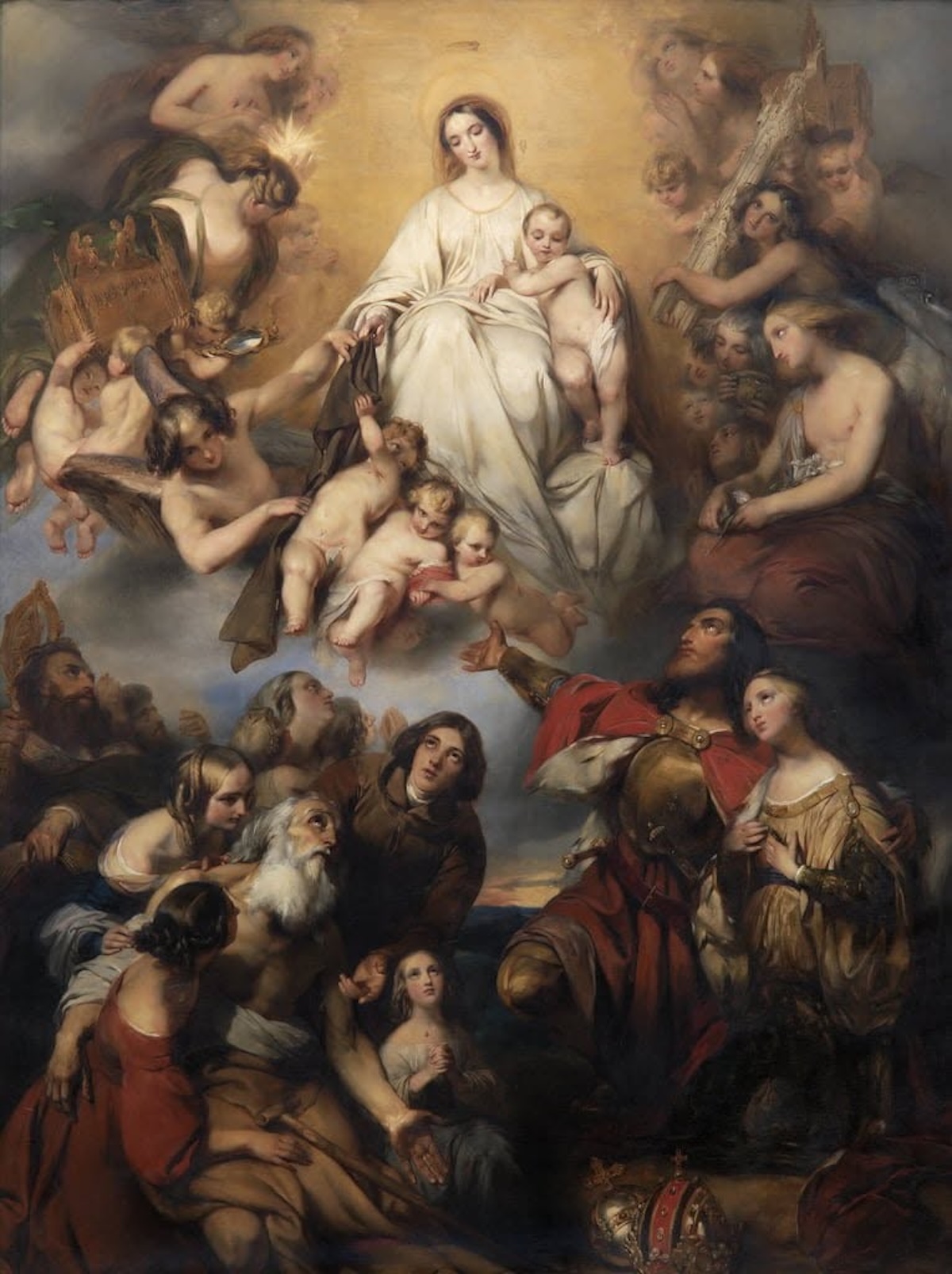
“Yet you inquire: Since He whom my soul loves is within me, why don’t I find Him or experience Him? The reason is that He is hidden, and you do not hide yourself as He does so that you may find Him and feel Him. He who is looking for a hidden thing should secretly penetrate its hiding place, and when he finds it, he too is hidden as it is.”
— St. John of the Cross, Spiritual Canticle 1, 9
I hope that this post was helpful and I’m sharing additional books and resources below that I’ve found helpful as a Carmelite Tertiary.
Recommended Books + Resources
Several years back, a priest sent me this series on The Spiritual Life by Fr. Bernard Uttley, OSB which was invaluable in guiding me.
Here are more favorite resources:
- Common Mystic Prayer by Gabriel Diefenbach
- Carmelite Manual for Tertiaries
- The Way of Perfection for the Laity (internet archive)
- The Spiritual Life: A Treastis on Ascetical and Mystical Theology by A. Tanquerey
- Traditional Carmelite Tertiary Resources + History
- God Within Us by Fr. Raoul Plus, S.J.
- The Collected Works of St. Teresa of Avila, Vol. 1
- The Collected Works of St. Teresa of Avila, Vol. 2
- Union with God: According to St. John of the Cross
- The Way of Prayer: A Commentary on Saint Teresa’s Way of Perfection
- The Collected Works of St. John of the Cross
- The Practice of the Presence of God
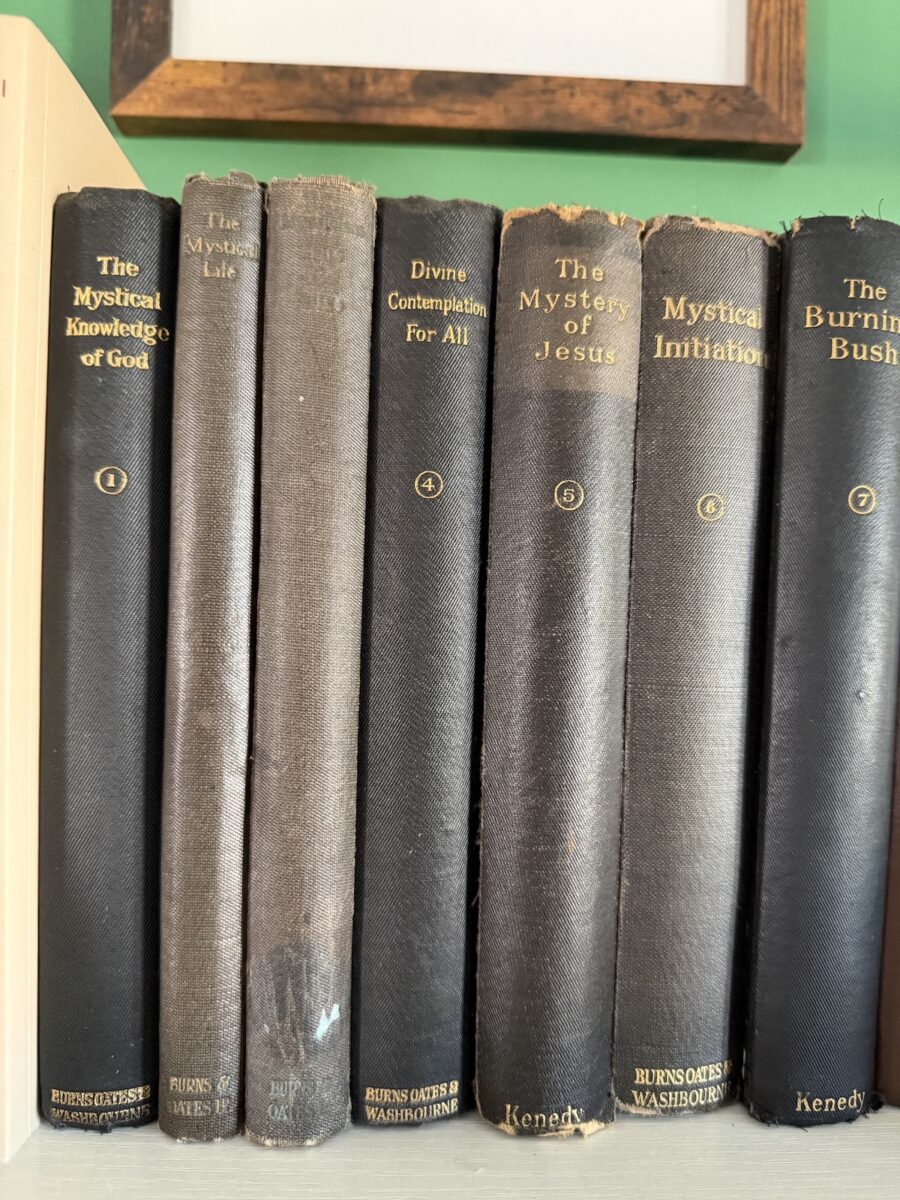
If you can find the complete works of Dom. S. Louismet, OSB, I would highly recommend doing so. The advice of Dom Louismet is a true gem in aiding one in a deeper spiritual life. And he explains the mystical knowledge of God in a simplified, easy to follow way. I have all 7 of the vintage copies of the books listed in order (below), but I will also link to what is available currently on internet archive.