Disclosure: Joyfully Domestic may earn a commission for purchases made after clicking links on this page. View our disclosure policy for details.
When we talk about scholé in a Catholic Charlotte Mason homeschool, we’re talking about something much deeper than a method or schedule tweak. It’s a whole posture toward learning.
Let’s talk about what it means—and how to cultivate it within a classical Charlotte Mason homeschool, especially in a home rooted in traditional Catholic life.
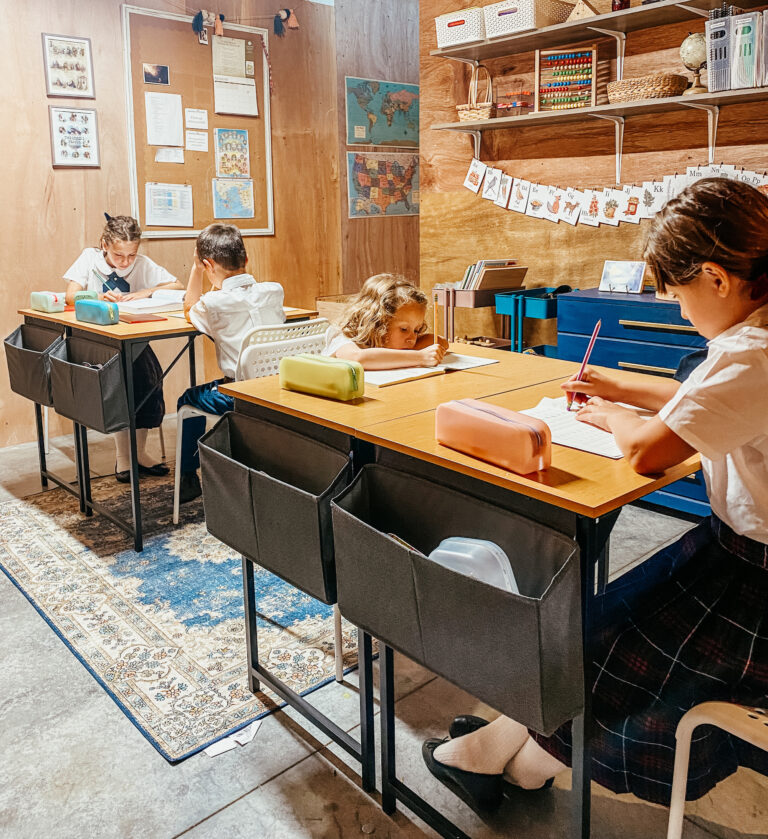
First, what is scholé?
The word scholé is Greek. It’s the root of our word “school,” and it originally meant leisure. But here’s the fun thing, leisure did not mean what we moderns think it does.
It’s not scrolling-your-phone leisure. Or collapsing on a couch after a long day leisure. In fact, it has nothing to do with idleness or laziness.
But instead, it is a contemplative leisure — an unhurried time for Truth, Beauty, and Goodness.
The kind of leisure where the soul has room to breathe, so to speak.
Josef Pieper talks about this beautifully in Leisure: The Basis of Culture — he argues that real culture grows out of contemplation, not productivity.
Without leisure, a society may be busy—but it cannot be truly human. Leisure must be understood that it is a mental and spiritual attitude.
This idea harmonizes deeply with Charlotte Mason’s philosophy, “Education is an atmosphere, a discipline, and a life.”
Scholé protects that atmosphere.
Scholé and the Classical Model
Many classical homeschoolers are familiar with the Trivium model: grammar, logic, and rhetoric. This structure provides helpful developmental guidance and academic tools.
But scholé asks a deeper question: is the child encountering reality in a contemplative way?
The Trivium emphasizes skills:
- Memorization
- Analysis
- Argument
- Expression
Scholé emphasizes formation:
- Wonder
- Attention
- Reverence
- Love of what is true
If children are trained to argue before they are trained to adore, we risk forming cleverness without wisdom.
The classical tools are good. But scholé reminds us that tools must serve something higher: the formation of a soul capable of contemplation.
All good education aims at forming the child in virtue and wisdom. Wisdom and virtue grow in students when they enjoy scholé.
Charlotte Mason’s method is already deeply compatible with scholé:
- Short, focused lessons
- Living books instead of dry textbooks
- Narration instead of worksheets
- Time outdoors
- Poetry and sacred art
- Habit training rooted in virtue
The Mother-teacher sets the tone + atmosphere
Before we dive too fully into what this looks like in the home, I want to begin with a reminder: That as mother-teachers, we set the home atmosphere.
We really need to have the right attitude — one that is calm, restful, devout, and not frazzled, or stressed out.
It is impossible to cultivate scholé or contemplation in a home ruled by anxiety. If we are frantic, hurried, and constantly measuring ourselves, the atmosphere absorbs it.
Scholé for the mother might look like:
- Practicing the Presence of God.
- Spiritual reading during quiet afternoons.
- Observing the Liturgical Year with intention.
- Refusing to over-schedule or check off boxes.
- Seeking leisure and contemplation for ourselves.
A contemplative education requires a contemplative mother. We aren’t perfect, and serene at all times, but should pray for God’s grace to remain oriented towards what is eternal.
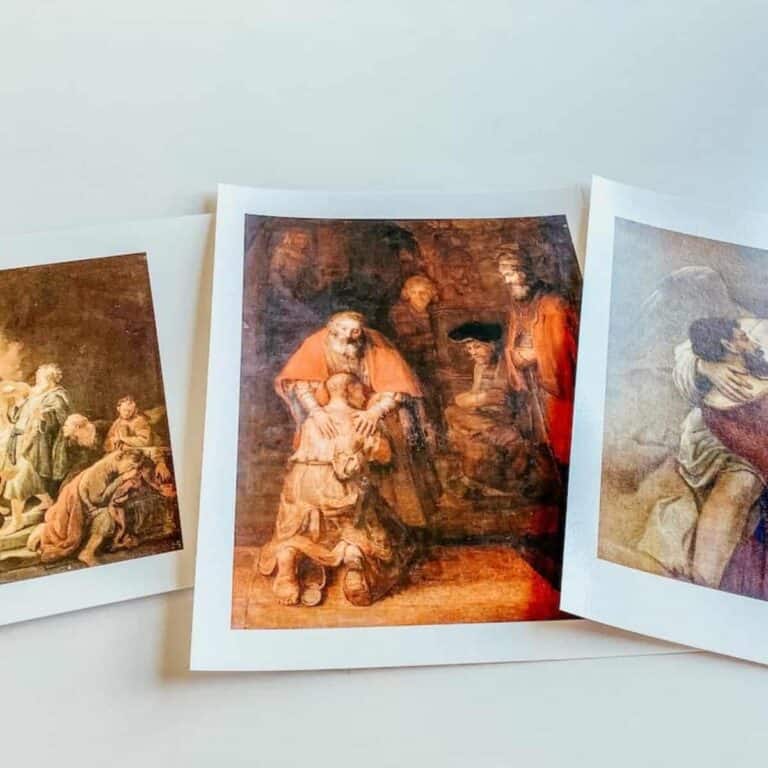
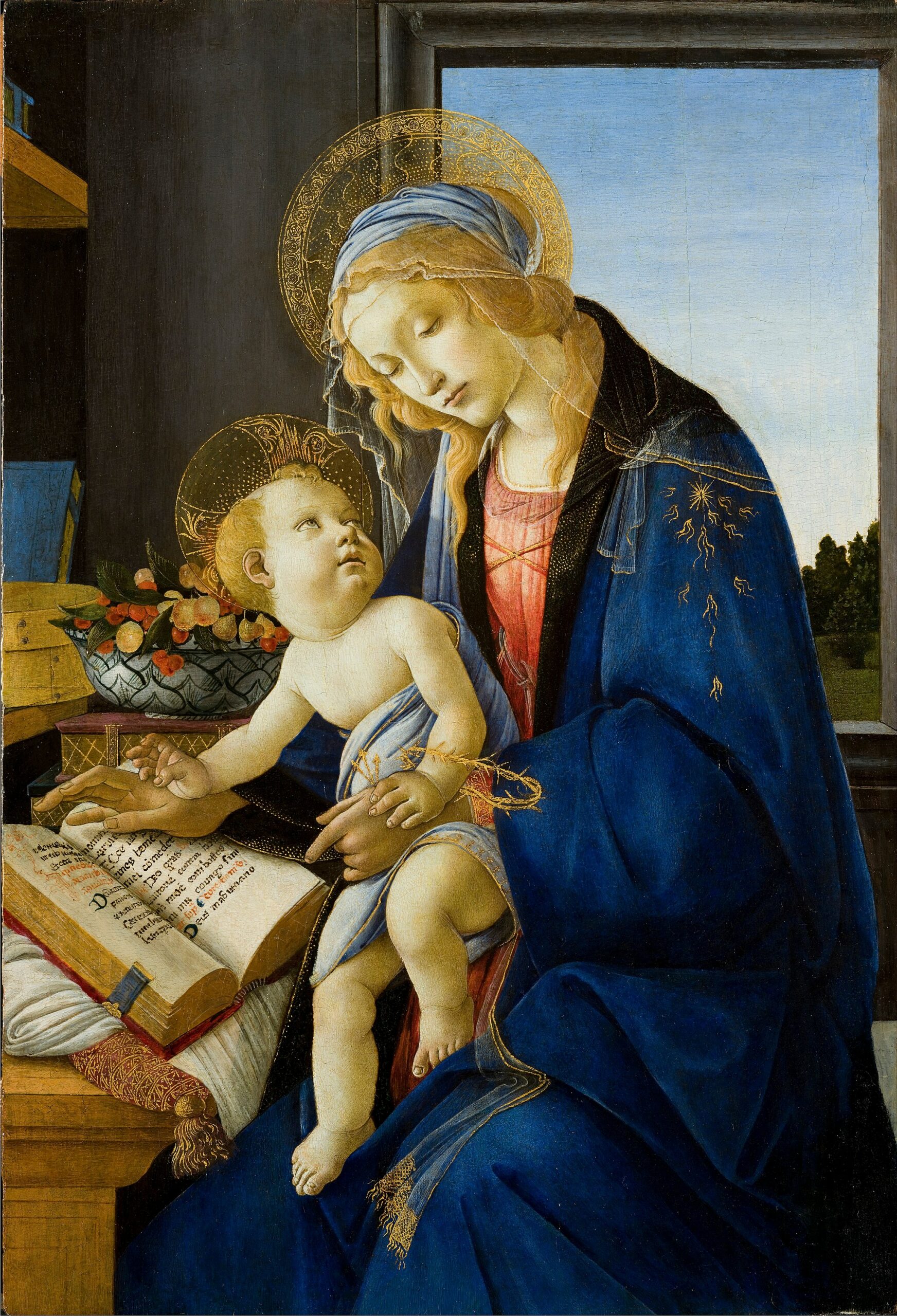
Charlotte Mason reminds us to contemplate the Serene Madonna.
“The Madonna, no matter out of whose canvas she looks at you, is always serene. This is a great truth, and we should do well to hang our walls with the Madonnas of all the early Masters if the lesson, taught through the eye, would reach with calming influence to the heart.”
Charlotte mason, school education
What Scholé Looks Like in a Catholic Charlotte Mason home
Incorporating scholé into your classical Charlotte Mason homeschool is not about abandoning rigor, but about reordering it.
Short Lessons
Charlotte Mason’s short lessons are not about efficiency, they are about attention. When a child gives full attention for twenty minutes and then stops, the mind rests before it is fatigued. This rhythm preserves delight.
Build in Real Silence
Silence is uncomfortable in modern homes, but it is essential for contemplation.
Leisure is a form of silence, of that silence which is the prerequisite of the apprehension of reality — only the silent hear and those who do not remain silent do not hear.
Josef Pieper, LEISURE: The basis of culture
Pieper goes on to say, “It is in the silent and receptive moments that the soul of man is visited by an awareness of what holds the world together”.
Children learn to receive before they respond. After a reading, allow a pause before narration. I’ve noticed that my children’s narrations improved greatly once we allowed for more time for contemplation.
Anchor Learning in the Liturgical Year
For a traditionally Catholic family, the Church calendar provides a natural rhythm of scholé.
- Advent invites interior preparation.
- Lent calls for sobriety, sacrifice, and recollection.
- Eastertide expands into joy and celebration.
Instead of fighting these rhythms with a rigid academic calendar, allow them to shape your tone and pace.
- In Advent, perhaps you lighten academic intensity and dwell more deeply in prophecy and sacred music.
- In Lent, you might study the early martyrs or meditate on sacred art and cultivate quiet reflection.
- During Eastertide, nature study becomes a hymn of resurrection.
The liturgical year shapes the home atmosphere and homeschool rhythm.
Resources for the Mother Teacher
- Leisure: The Basis of Culture
- Only the Lover Sings: Art and Contemplation
- The Scholé Way
- The Intellectual Life
- The Age of Martha: A Call to Contemplative Learning in a Frenzied Culture (have not read yet, but is on my current TBR bookshelf)
- I’ve also heard good things about Teaching from Rest: A Homeschooler’s Guide to Unshakable Peace, but have not personally read it yet.
- The Liturgical Life (category on our site)
- Mother’s Scholé (category on our site)
What stands out to you from these ideas?
I hope that you found this post helpful. And I’d love to hear what resonates most! Tell me what you’d add to these ideas or how you incorporate scholé into your homeschool!